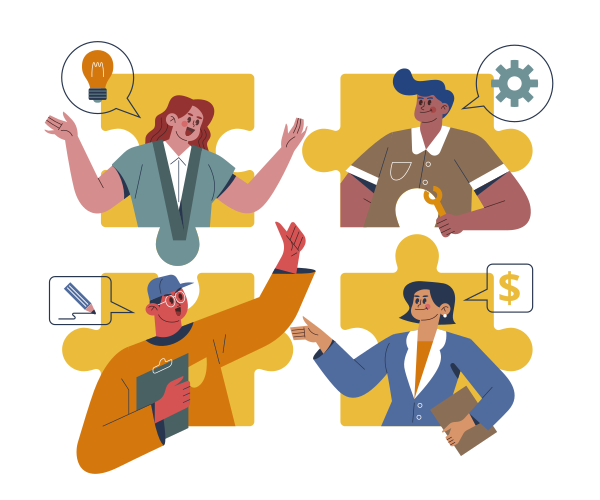

If you’re searching for how to feel connected at work, skip the theory: pick one small experiment, run it this week, and watch rapport improve in 24-72 hours. This guide gives copy‑paste scripts, low‑friction rituals for remote, hybrid, and in‑person teams, and a simple playbook you can use solo or as a manager to build connection at work fast.
- 5 quick experiments to feel connected at work in 24-72 hours
- Why workplace connection matters – the business and personal case
- Which workplace connection profile are you? Pick actions that fit
- A 4‑step personal playbook to raise your connectedness
- Step 1 – Map your current baseline
- Step 2 – Ask with intent
- Step 3 – Start small, repeat often
- Step 4 – Make it sustainable
- Manager and leader moves that actually create connection
- Remote & hybrid playbook – close the structural gaps
- Measure it – three simple metrics and a short tracking plan
5 quick experiments to feel connected at work in 24-72 hours
Try any of these five low‑friction plays. Each one includes who to invite, time cost, cadence, and tiny scripts you can paste into Slack or a calendar invite.
- 10‑minute “random pair” Zoom
Two people randomly paired for a 10‑minute video chat. Time: 10 minutes per person. Who: whole team or cross‑team roster. Cadence: weekly or biweekly.
Why it works: Recreates watercooler randomness with almost no overhead – great for Remote work connection.
Zoom prompt: “You’ve been paired for 10 minutes – no work agenda. One fun question each. I’ll start: What hobby surprised you this year?”
- Hybrid team walking session
30‑minute walk‑and‑talk: in‑office folks walk together; remote folks join by phone or in small remote groups. Time: 30 minutes. Who: small teams (4-8). Cadence: weekly or monthly.
Why it works: Movement and casual conversation build rapport faster than sitting meetings – a solid hybrid team bonding tactic.
Manager kickoff: “Let’s step out for 30 minutes Friday – no slides, just progress and people. Bring one non‑work story to share.”
- 15‑minute Monday “Wins & Weirds”
Quick round where each person shares one small win and one weird or interesting moment. Time: 15 minutes. Who: team. Cadence: weekly.
Why it works: Low pressure, builds psychological safety and shared context – a fast way to boost workplace belonging.
Script: “One win and one weird – wins can be work or life, weirds are anything that made you smile or raise an eyebrow.”
- Interest‑based Slack channel launch
Create a focused channel like #trail‑runners or #coffee‑club. Time: 5-10 minutes to set up; participation optional. Who: company or cross‑team. Cadence: always‑on.
Why it works: Low‑effort community building and easy hooks for small talk that support ongoing connection.
Slack invite line: “New channel: #coffee‑and‑code – drop your go‑to coffee order or #1 coding tip. First post: morning ritual that keeps you sane?”
- 1:1 “get‑to‑know” for new hires
Structured 30‑minute agenda in week one: 5 minutes personal intro, 10 minutes role context, 10 minutes how they like to work, 5 minutes next steps. Time: 30 minutes. Who: manager + new hire. Cadence: once, with light check‑ins at week 2 and month 1.
Why it works: Faster integration and clearer expectations – a practical onboarding move to build connection early.
Manager line: “Two quick questions: what energizes you at work, and what’s one thing teammates should know about how you like to collaborate?”
Try BrainApps
for free
Why workplace connection matters – the business and personal case
Connection isn’t optional. Around 43% of people say they don’t feel connected at work, and remote employees often report noticeably lower belonging than in‑person peers. That gap affects performance and retention.
Two clear business outcomes jump out. First, connected teams move faster: better handoffs, fewer misunderstandings, and shorter feedback loops. Second, retention improves – employees who feel connected are more engaged and less likely to leave, which saves hiring time and knowledge loss.
For individuals, the upside is immediate: more energy, less anxiety in crunch weeks, clearer communication, and fewer friction points. In short, you get steadier days and better teamwork from small investments in social connection.
Which workplace connection profile are you? Pick actions that fit
People recharge social energy differently. Use these three profiles to match actions to temperament so building connection doesn’t feel forced.
- The Close Friend (wants deep ties)
Recharge: long 1:1s and small groups.
- Host a monthly dinner or virtual happy hour with 3-5 coworkers.
- Be a new‑hire buddy and schedule a 60‑minute “get to know you” chat.
- Lead a small peer support group (career check‑ins or book club).
- The Friendly Colleague (likes warmth, light sharing)
Recharge: rituals and brief banter.
- Create an interest channel and post weekly.
- Start 10‑minute pre‑meeting check‑ins.
- Run a monthly 15‑minute skill‑share.
- Strictly Professional (prefers task‑focused ties)
Recharge: collaboration and clear boundaries.
- Schedule regular co‑working blocks.
- Use short, outcome‑focused 1:1s with one personal check‑in.
- Offer pair problem‑solving sessions instead of casual social chats.
One‑line scripts for mixed pairs:
- To a Strictly Professional coworker: “Want to pair on this task for 45 minutes this week? Two heads make faster progress.”
- To a Close Friend: “Quick chat Friday? I’d love to hear what you did this weekend.”
- To a Friendly Colleague: “We’re starting a 10‑minute Wins round on Monday – want to join?”
A 4‑step personal playbook to raise your connectedness
Use these steps to move from intention to habit. Each step has practical prompts you can use today.
Step 1 – Map your current baseline
Quick self‑check: Who would you call outside work? How often do you have informal chats? Do you feel you belong?
One‑line survey to teammates: “Quick: How connected do you feel to the team this month? 1-5.” Simple target: add one friendly contact per quarter.
Step 2 – Ask with intent
Permission matters. Use single‑question polls and short meeting prompts to surface preferences without pressure. Poll example: “Which do you prefer? (A) 10‑min random pairs, (B) Weekly wins, (C) Interest channels – pick 1.”
Over video, watch tone and pauses; try: “That sounded important – want to share more offline?” to invite deeper connection without forcing it.
Step 3 – Start small, repeat often
Micro‑habits beat one‑offs. Try a daily 2‑line win in chat, a weekly 30‑minute rotating check‑in, and a monthly social experiment. Put the first agenda line in the calendar invite so joining is effortless.
Step 4 – Make it sustainable
People miss things. Use a follow‑up line: “No worries if you missed Wins & Weirds – drop a two‑line update next week.” Rotate owners, cap activities at 15-30 minutes, and keep participation optional with gentle reminders.
Manager and leader moves that actually create connection
Leaders shape norms. These four priority actions scale connection beyond individual initiatives.
- Model vulnerability
Share brief personal context in meetings and 1:1s to lower the bar for others to open up.
- Redesign meeting load
Cut unnecessary meetings and add meeting‑free blocks so people can join co‑working or social rituals without schedule guilt.
- Onboard for relationships
Extend onboarding with a buddy, curated channels, and early casual meetups so new hires build ties from day one.
- Designate connection ambassadors
Identify people energized by social coordination, compensate or recognize them, and make their role visible in workload planning.
Use lightweight templates: onboarding buddy checklist (30‑minute intro chat, channel tour, Wins & Weirds invite, check‑ins at week 2 and month 1); 1:1 relationship prompts (“What’s energizing you? Who do you want to know better? One thing I can do to help?”); and a manager email to launch a new social channel. Structural changes that help: meeting‑free days, cross‑team working sessions, and recognizing collaboration wins in all‑hands.
Remote & hybrid playbook – close the structural gaps
Remote and hybrid teams lose casual ties unless you design predictable touchpoints. These patterns create connection without forcing it.
- Asynchronous social signals: short status posts like “Today I’m proud of…” so people can respond on their schedule.
- Intentional co‑working blocks: open video rooms for focused work with optional small talk before and after.
- Hybrid‑day pairing rules: on hybrid days, require one cross‑location paired activity so remote voices aren’t left out.
- Space/time hacks: stagger lunch hours, add 5‑minute pre‑meeting socials, and share commuting playlists to create shared rituals.
Example weekly hybrid‑day gameplan:
- 09:00-09:15 – Virtual coffee: random pair duos meet for 10 minutes
- 10:30-12:00 – Focus blocks with optional co‑working room
- 12:00-13:00 – Team lunch (remote on a call; camera optional)
- 15:00-15:30 – Quick sync + 5‑minute Wins & Weirds
Keep channels lean: #team‑updates (work), #watercooler (light), #interest‑topic (hobbies, max five), and #co‑working (live slots).
Measure it – three simple metrics and a short tracking plan
Pick a few measures that reflect behavior and belonging without turning this into a heavy analytics project.
- Count of friendly coworkers – average number of colleagues people would message outside work. Target: +1 per person per quarter.
- Belonging pulse score – one question (1-5): “I feel a sense of belonging on this team.” Target: move average toward 4 within 6 months.
- Participation rate – percent of team attending at least one connection activity per month. Target: 60-75% depending on optional vs. required.
Mini pulse (3 questions):
- On a scale of 1-5, how connected do you feel to your teammates?
- How many colleagues would you describe as friendly contacts? (0, 1-2, 3-5, 6+)
- Did you participate in any team social or co‑working activity last month? (Yes/No)
- Cadence: run the mini pulse monthly and review 3‑, 6‑, and 12‑month trends.
- Small targets: aim for +0.3 at 3 months, +0.6 at 6 months, and +1.0 at 12 months on the 1-5 scale.
- Friendly count: measure quarterly; aim for +1 per person per quarter. Participation: track monthly; aim for 60% by month 3 and 75% by month 6.
What good looks like: weekly Wins & Weirds plus random pairs hit ~65% participation in two months and raise average belonging by ~0.4, or onboarding buddies and hybrid rules add ~2 friendly coworkers per person in six months and reduce voluntary exits.
Conclusion: Connection isn’t magic. Pick one targeted experiment from above, match it to your team’s profile, repeat it, and measure small wins. The payoff is better energy, smoother collaboration, and lower churn – all from tiny, consistent investments in workplace connection.
FAQ
How many work friends do I need to feel connected? Quality beats quantity. A practical target is 3-5 friendly coworkers you’d message outside work and 5-7 to feel steady belonging. Track names and aim to add one contact per quarter.
What if my teammates prefer to stay professional? Respect boundaries. Use task‑oriented rituals that double as social time: short co‑working blocks, structured 1:1s with one personal check‑in, or brief pre‑meeting prompts.
How do I start connection efforts without looking weird? Keep it low‑friction and tie it to productivity or wellbeing (e.g., “10‑minute random pair for faster handoffs”). Add invites to existing calendar slots so joining feels normal.
How can managers measure connection without micromanaging? Use aggregated, optional metrics: a one‑question monthly belonging pulse, average friendly‑count, and participation rates. Keep responses anonymous, report trends, and pair findings with small experiments instead of individual tracking.




.svg)